

Future Maintenance Technologies (FMT) has partnered with Metro Service A/S to bring ARIIS, the Automated Rail Infrastructure Inspection System, to the Copenhagen Metro. It marks Denmark's first deployment of fully automated, AI-driven track inspection, and Metro Service holds exclusive rights to operate ARIIS anywhere in the country.
The Challenge
Metro Service A/S is not a typical operator. Since 2002, they have run Copenhagen's fully driverless metro 24 hours a day, seven days a week, delivering more than 30,000 daily departures and moving over 370,000 passengers a day. In 2025 alone, the network carried 135 million passengers, with 95% reporting they were satisfied or very satisfied with their journey - reflecting a team that takes operational excellence seriously and is unafraid to invest in what comes next.
But staying at the top requires constant reinvention. As the network grows, traditional manual track inspection becomes harder to sustain:
Doing more of the same was never going to keep Copenhagen at the front of the pack.
The FMT Solution
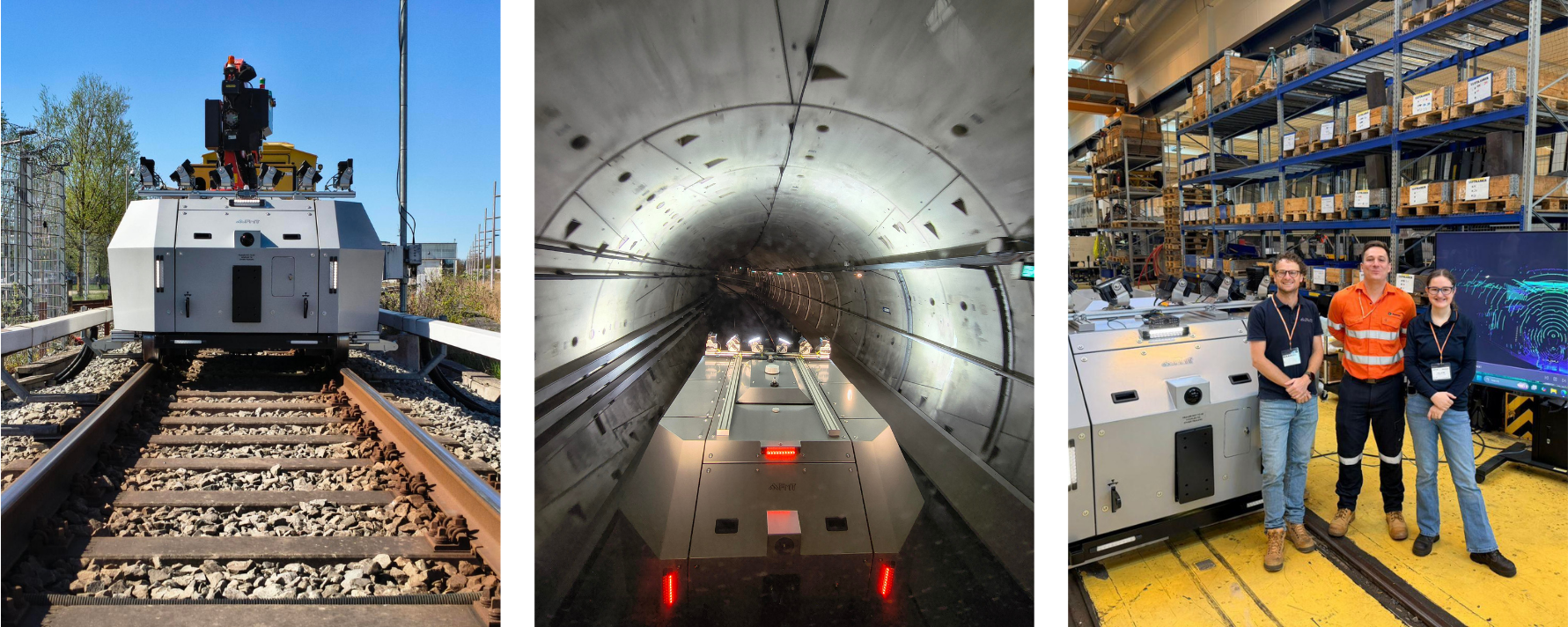
The Automated Rail Infrastructure Inspection System (ARIIS) is a novel autonomous rail vehicle built for detailed track and infrastructure inspection. ARIIS operates as a vehicle, simplifying the process of taking track possession and reducing the safety risk of sending personnel into live rail corridors. This distinction has proven critical with regulators and operators alike, delivering a step-change in both workforce safety and operational efficiency.
It uses FMT's proprietary LiDAR, laser scanning, and optical sensor technologies to capture detailed 3D models of track geometry, fasteners, ballast, sleepers, and tunnel infrastructure. Just clean, repeatable data, delivered straight into FMT's analytics platform.
For Metro Service, this is more than a new tool. René Sievers, Head of Maintenance for the M1/M2 lines, frames it as a shift in how the business operates: “With the introduction of new inspection technology, we are now able to move towards a more data-driven approach - enabling smarter decisions, higher quality insights, and increased efficiency across our network.”
When passenger services push maintenance windows to their limits, ARIIS creates headroom. Operating autonomously around the clock, it captures precise track and infrastructure data regardless of how pressured the situation is - accurate, repeatable, and reliable. Metro Service now owns that capability in-house, on demand, without reliance on expensive outsourced inspection services.
Why It Matters
Rail infrastructure has been inspected in much the same way for over a century. It is one of the oldest industries on earth, and many of its core maintenance practices have barely changed since the days of steam. That is no longer sustainable. Operators worldwide are under mounting pressure to maintain ageing assets safely and efficiently, with shrinking labour pools and rising expectations from passengers and regulators alike. Track inspection sits at the heart of that pressure: resource-intensive, constrained by short possession windows, and dependent on a workforce that is becoming harder to find every year.
The Copenhagen deployment shows what the next century of rail maintenance can look like. Fully autonomous, data-rich, and repeatable. Safer for personnel, faster for operators, and built around the kind of high-quality data that predictive maintenance has always promised but rarely delivered.
